
Our Services
Cumberland, Hoke & Moore Counties

Drywall Repair & Water Damage Restoration

Clean sheetrock reconstruction, overhead ceiling leak repair, and lower-wall remediation flood cuts executed with solid framing backers and zero living space dust spread.

Clean Isolation: Floor-to-Ceiling Poles & Magnetic Entry Solid Framing: Squared Back to Sound Joists & Studs Seamless Finish: Setting-Mud Core & Feathered Surface

Documented Jobsite Progression

Real-world containment prep, structural framing, multi-coat finishing, and completed repaint blends from local jobs.

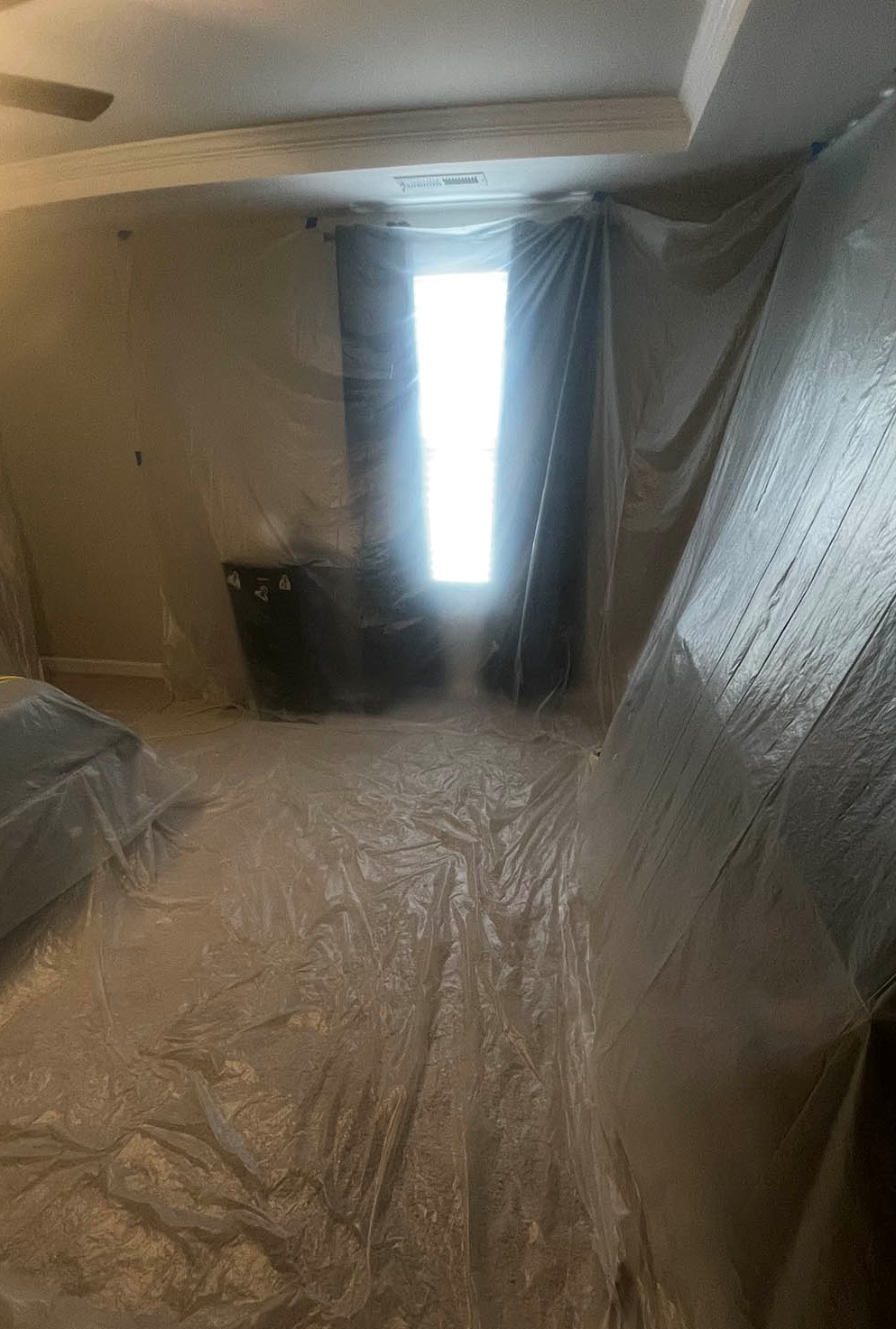
Plastic dust barrier in living room with extending poles
Prep & Containment

Active Bedroom Isolation

Sealed barrier preventing fine sanding dust from migrating into adjacent bedrooms and living areas.

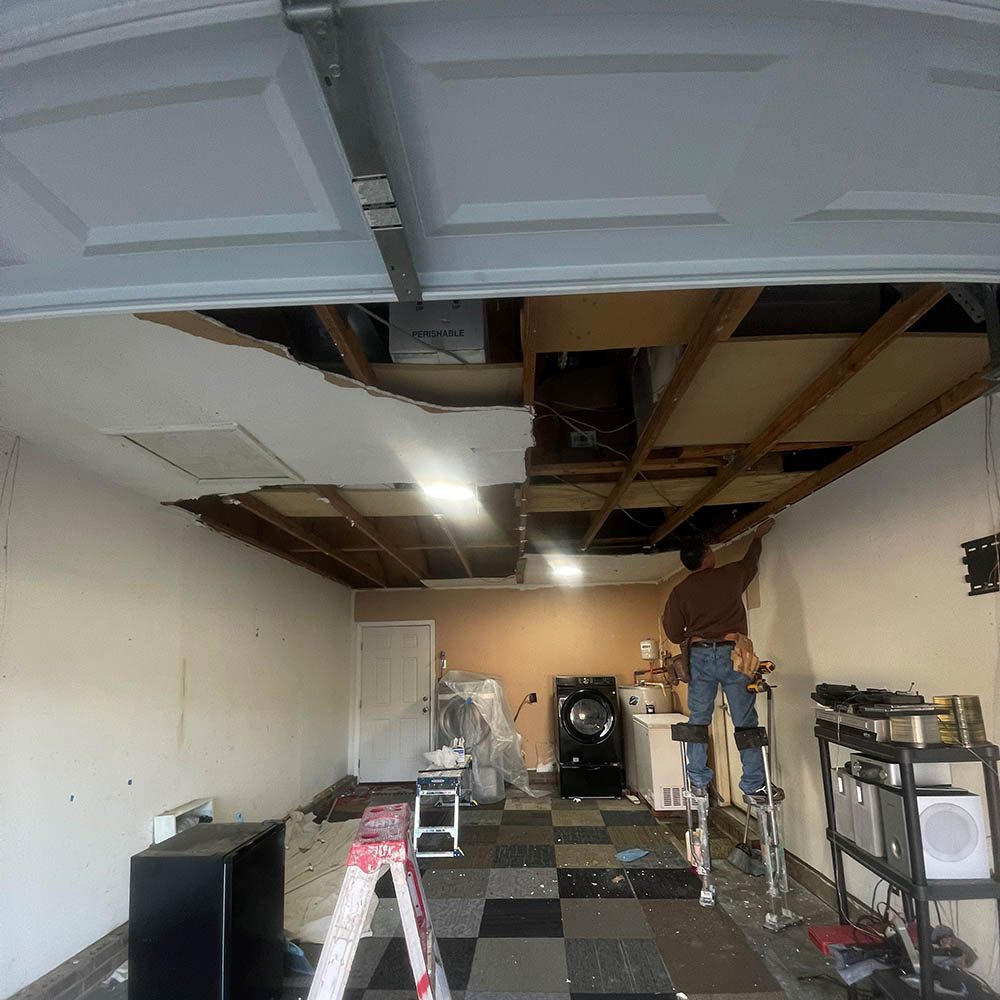
Garage ceiling demo and framing prep
Demolition & Clearing

Ceiling Tear-Out & Framing Inspection

Removing sagging, water-damaged drywall back to sound structural joists and verifying cavity dryness.

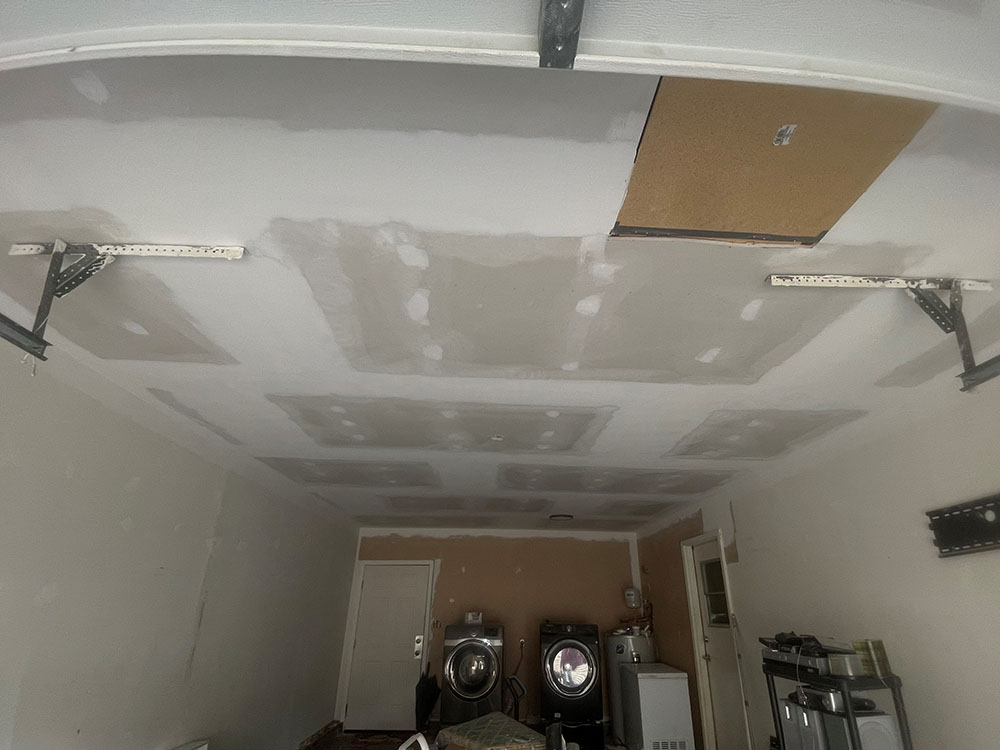
Multi-coat taped and mudded garage ceiling
Mudding & Taping

Multi-Pass Compound Finish

Feathering taped seams flat across large spans to prevent joint ridging or visible shadowing under lights.

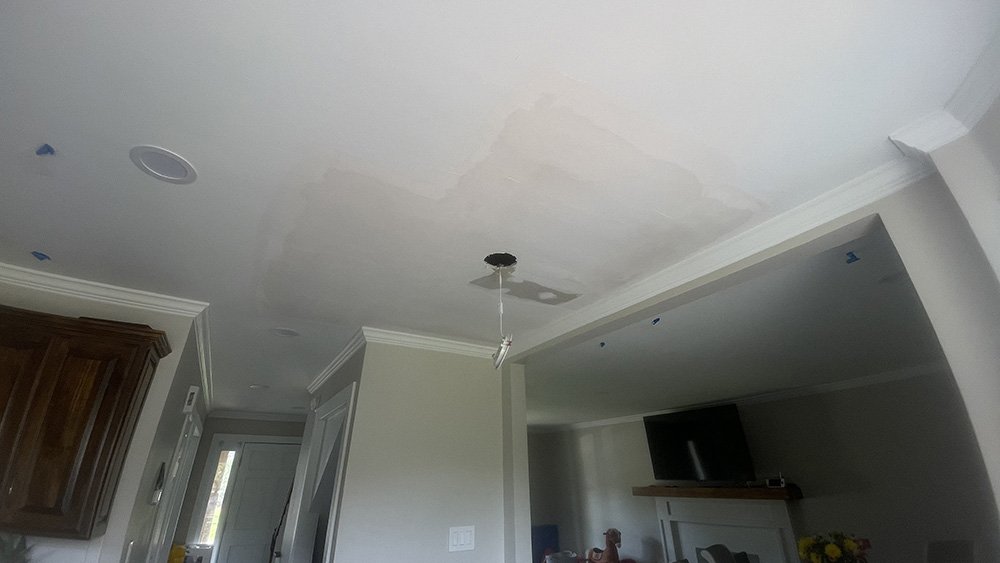
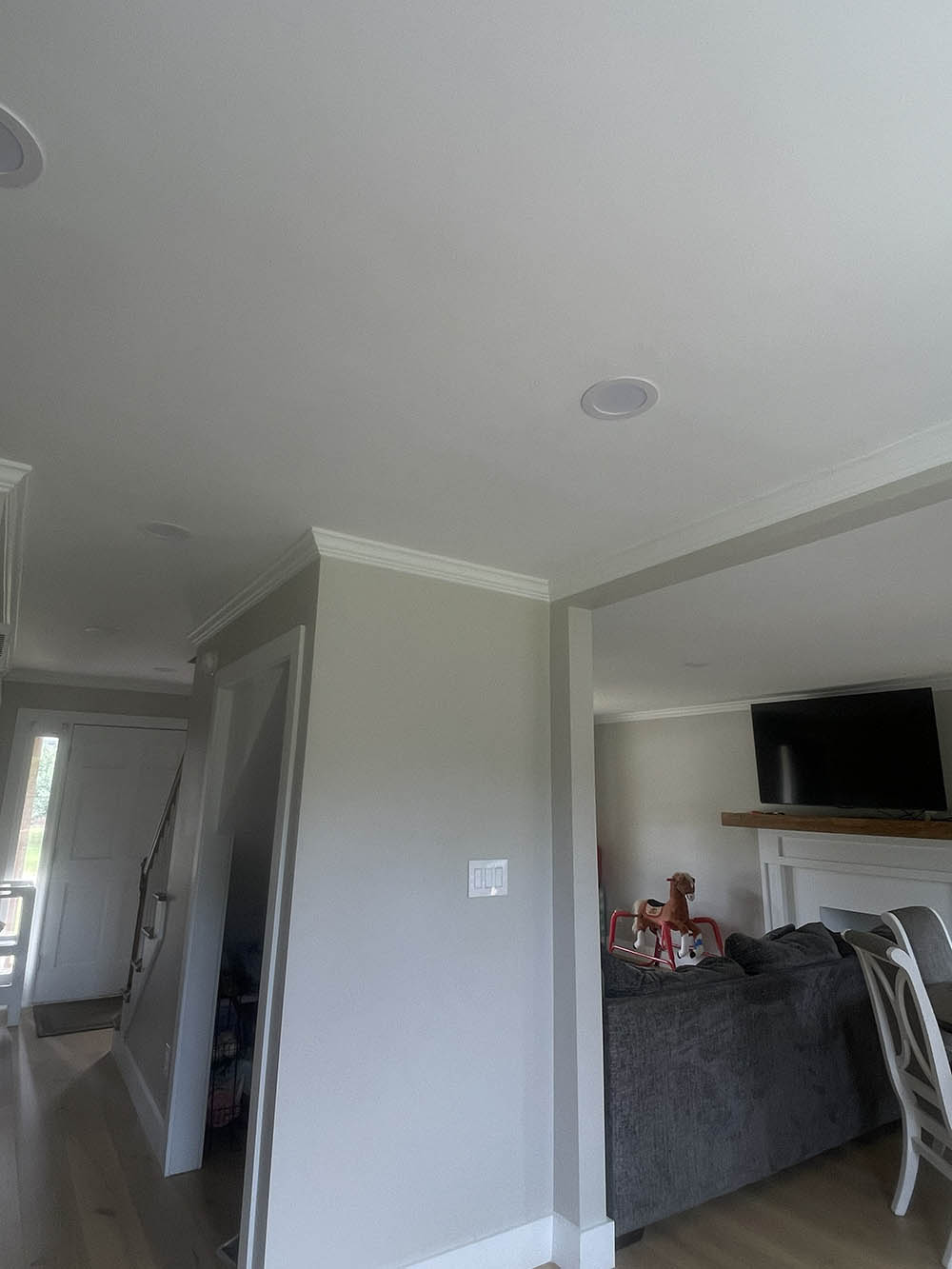
Skimmed and prepped ceiling patch around light box
Skim Coating

Electrical Box & Joist Rebuild

Ceiling patch prepped flush around an overhead light fixture prior to prime and texture matching.

Finished painted ceiling blend
Finished Trade

Stain Seal & Uniform Finish Paint

Sealer applied to lock out water rings followed by two uniform ceiling topcoats.

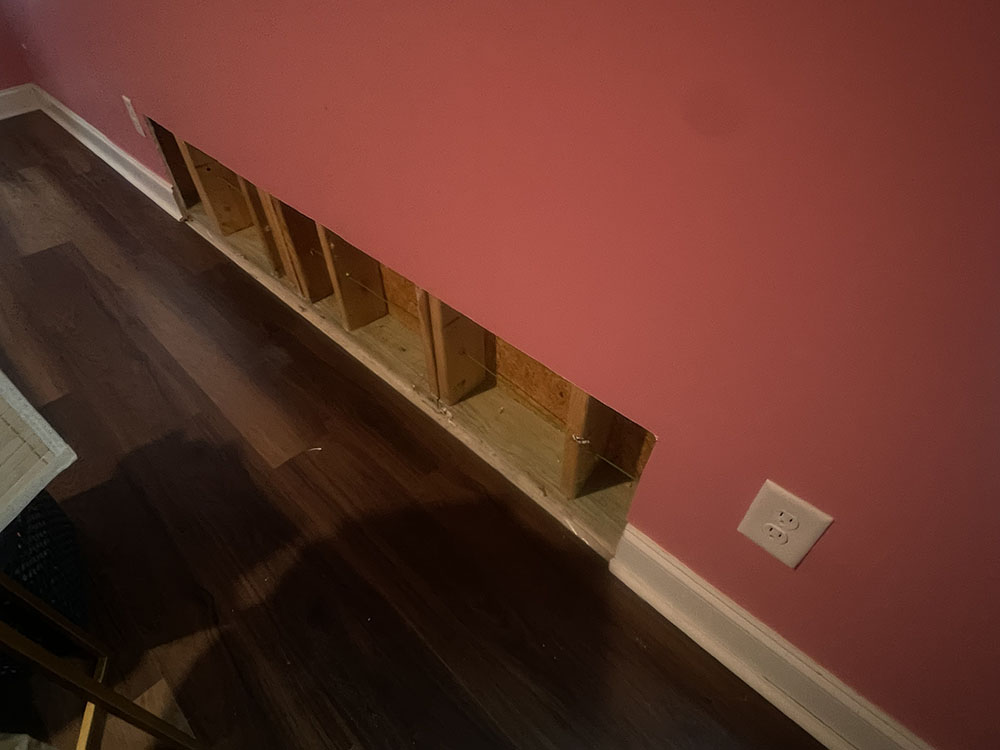
Lower wall flood cut showing exposed studs
Remediation Repair

Lower Wall Remediation Flood Cut

Precise horizontal cuts clearing damaged board and leaving exposed studs ready for new sheetrock.

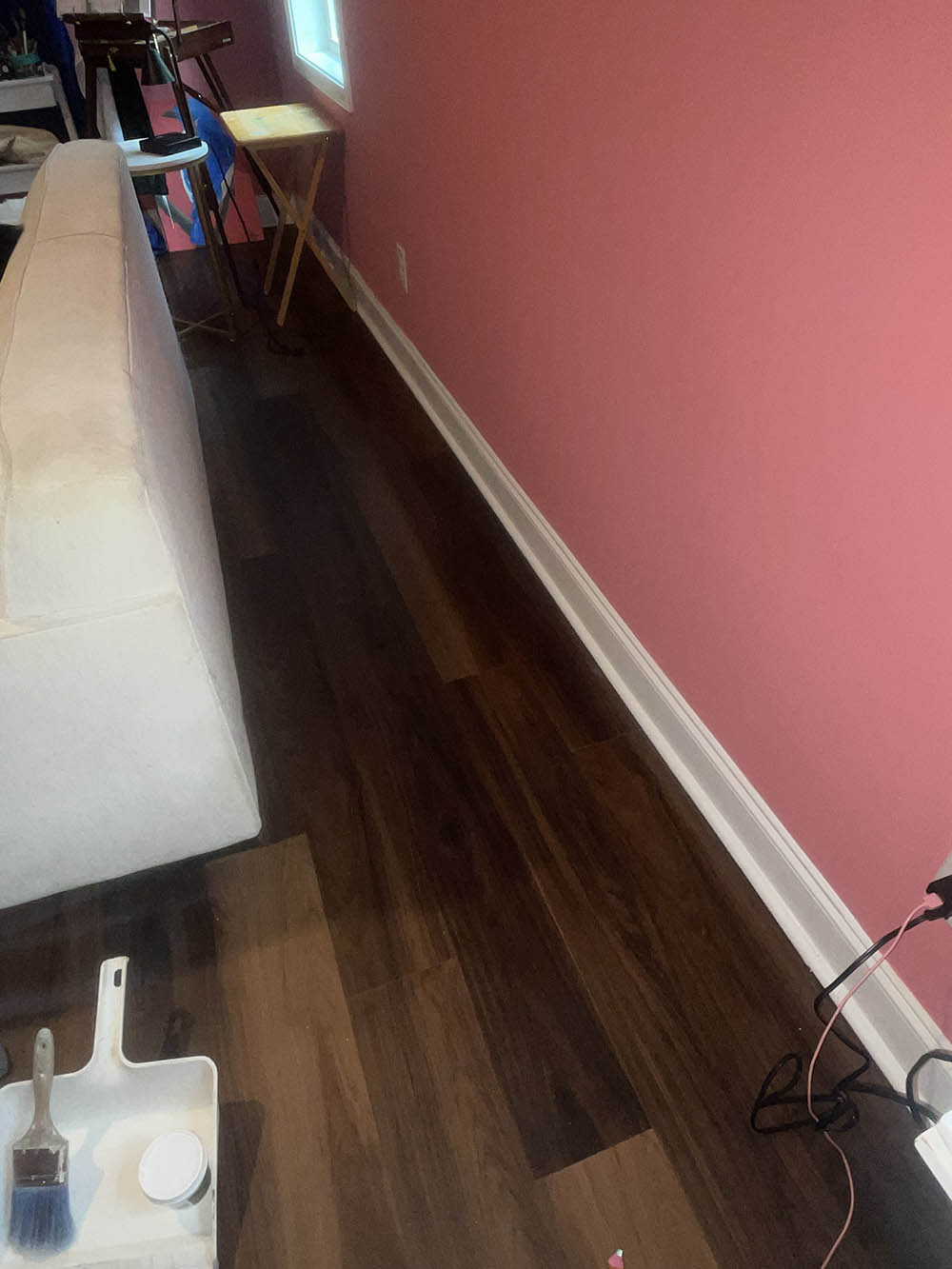
Completed lower wall repair with baseboard re-installed
Complete Hand-Off

Rebuilt Wall & Reinstalled Baseboard

Repaired flood cut taped, floated, painted, and finished with reinstalled baseboard and caulked trim.

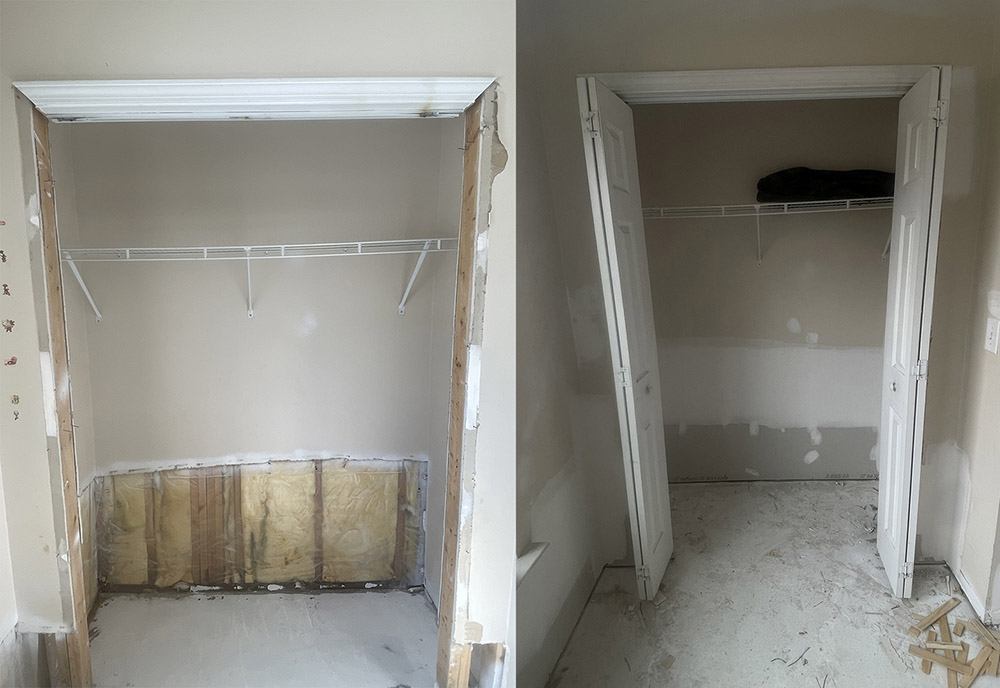
Closet flood cut before and after comparison
Before & After

Closet Water Damage Reconstruction

Full lower perimeter cut, cavity dryness check, new sheetrock installation, and fresh interior finish.

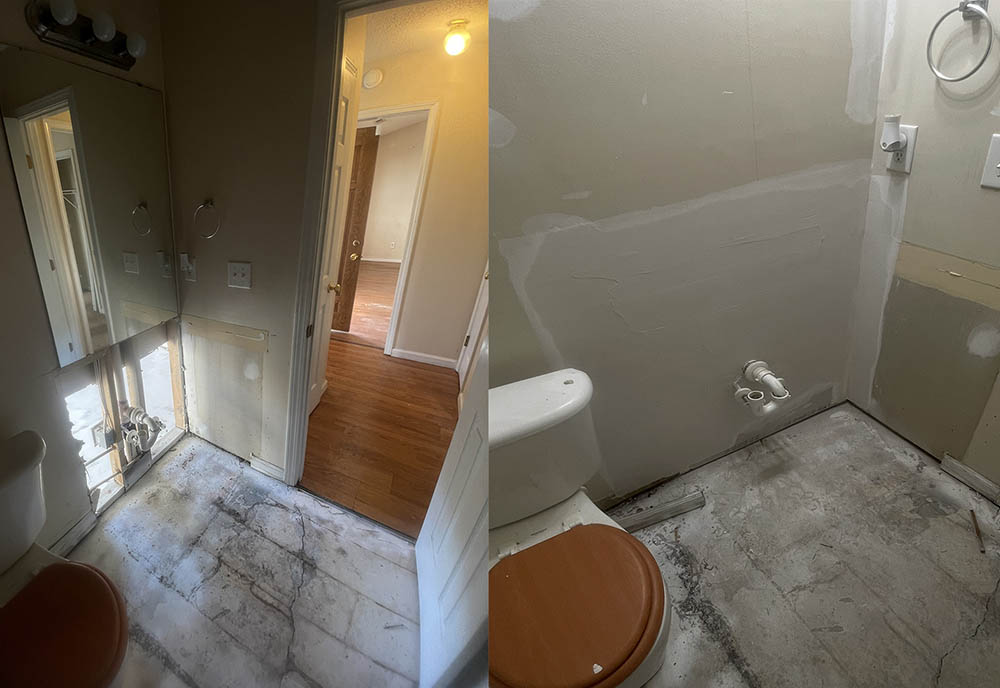
Bathroom vanity flood cut drywall repair
Substrate Prep

Bathroom Vanity Wall Cutout

Clean cutout behind bathroom plumbing fixtures reinforced with backing lumber for solid board fastening.

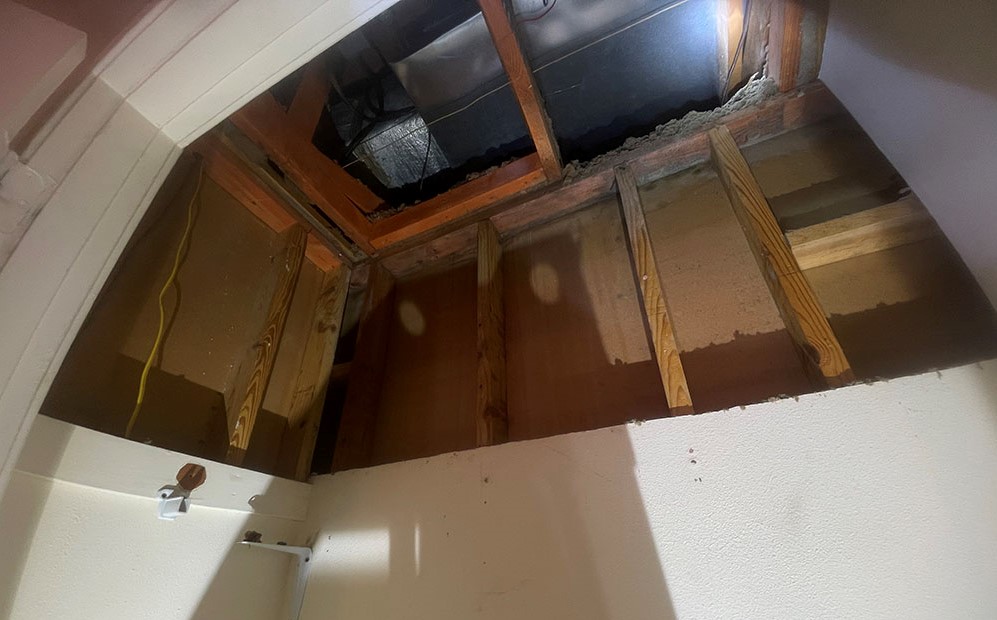
Drywall closet ceiling cut back cleanly to solid joists and studs

Cutting to Sound Wood, Not Soft Gypsum

A durable drywall patch requires solid framing behind it. Cutting a rough circle around a leak and screwing into soft, water-softened gypsum leads to sagging joints and cracked tape within months. We treat every drywall repair as a framing project first.

  • Square Cuts to Sound Framing: We cut damaged drywall back to the center of the nearest structural joist showing zero signs of moisture or sagging.
  • Flood Cut Stud Verification: For lower-wall plumbing leaks, we square rough remediation cuts to adjacent wall studs, checking for mold and hidden moisture before closing the cavity.
  • Solid Cleat Backing: Every open joint receives added pine backing cleats, ensuring new drywall screws into solid wood rather than floating over hollow space.
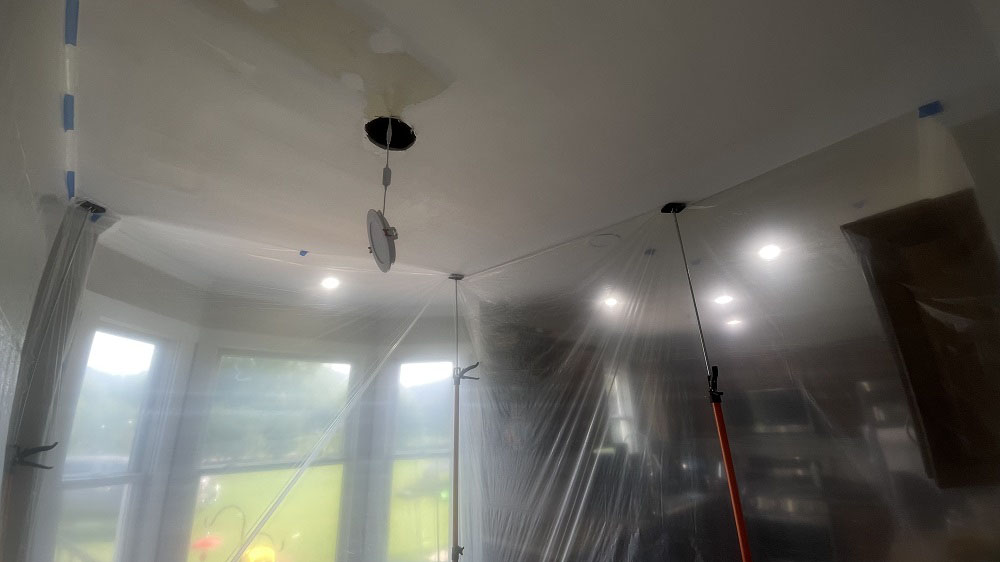
Floor-to-ceiling plastic dust barrier with magnetic entry

Keeping Dust Out of Your Living Space

Drywall dust spreads easily if left unchecked. We set up physical barriers before opening ceilings or mixing mud, ensuring your living areas stay clean throughout the repair.

  • Floor-to-Ceiling Barrier Poles: Spring-loaded tension poles secure heavy plastic sheeting tightly between floor and ceiling without puncturing your paint or trim.
  • Hands-Free Magnetic Doors: Work areas are sealed with magnetic self-closing entryways that seal automatically when passing through with tools and debris.
  • Non-Shrinking Fast-Setting Mud: We bed joints in fast-setting compound so fill coats will not sink or dimple as they cure, then skim with finishing compound for a level surface.
  • Oil-Based Stain Sealing: Overhead water rings are sealed with a dedicated oil primer before finish paint is applied, preventing brown minerals from bleeding through the topcoat.

Drywall Repair & Reconstruction Scope

Solving substrate damage, structural moisture issues, and stress cracks across Cumberland, Hoke, and Moore Counties.

Ceiling Leak Damage

  • Overhead Plumbing Leaks: Cutting out saturated board, verifying joist condition, and hanging sag-resistant ceiling drywall.
  • HVAC Condensate Overflow: Repairing water-damaged sheetrock beneath attic air handlers and duct lines.
  • Roof Leak Sagging: Replacing wet gypsum, installing solid framing nailers, and floating seams flat across open ceiling spans.
  • Light Fixture Rebuilds: Reconstructing damaged sheetrock around overhead electrical boxes and recessed can lights.

Wall Cuts & Stress Cracks

  • Remediation Flood Cuts: Squaring off lower wall cutouts, installing solid backing, and hanging moisture-resistant board.
  • Door Knob & Impact Holes: Adding wood backing cleats behind wall voids so patched areas resist future impact.
  • Settlement & Truss Cracks: Stripping failed tape, resetting loose screws into studs, and embedding high-strength tape.
  • Plumbing Access Cutouts: Rebuilding access holes cut by plumbers for shower valves, cleanouts, and pipe repiping.

Mudding, Texture & Paint

  • Fast-Setting Base Coats: Utilizing setting compound that hardens without shrinking for rapid, stable base coats.
  • Smooth Level Skim Coats: Applying wide feathering coats to eliminate ridges, lap lines, and surface dips under light.
  • Texture Blending: Matching existing ceiling knockdown, acoustic popcorn, or orange peel without leaving visible patch borders.
  • Finish Paint Integration: Spot-priming with oil-based stain blockers and rolling ceiling white or wall paint flush to corner transitions.

Frequently Asked Questions

Direct answers on containment, water damage timing, and repair estimates.

How do you keep drywall dust from spreading through the house?
We lay drop cloths across the floor and erect floor-to-ceiling plastic containment walls using tension poles before any demolition or sanding begins. These barriers feature self-closing magnetic doors that seal automatically as our crew moves through, keeping sanding dust contained entirely within the active work area.
Does the active water leak need to be fixed before you start repairs?
Yes. The plumbing or roof leak must be completely repaired, and the internal cavity behind the wall or ceiling must be fully dry before new sheetrock is installed. If your plumber needs access to identify the leak, we can make neat inspection cutouts beforehand to help them locate the issue.
Will I be able to see where the drywall patch was made?
Our standard is to leave the repaired area seamless. By squaring the cut back to framing, feathering the compound out 12 to 18 inches past the repair, and using calibrated texture applications, the patch transitions smoothly into the surrounding surface. Once primed and painted, the repair blends into the original wall or ceiling line.
What is the difference between fast-setting mud and regular joint compound?
Fast-setting compound cures through a chemical reaction rather than air drying, meaning it hardens reliably without shrinking or sinking into the joint. We use setting mud for our tape bed and structural fill coats, then finish with lightweight joint compound that feathers down smoothly for sanding.
How can I get an estimate for my drywall repair?
Text clear photos of the damaged wall or ceiling to (910) 476-1872 along with your general location and brief notes about the issue. We can often review the scope directly from your photos to provide an estimate or coordinate a prompt on-site walk-through.
Call (910) 476-1872 Text Photos